Thursday, May 28, 2020

In the Footsteps of Eliza: Louisa Lee Schuyler’s Lifetime of Advocacy

Louisa (left) at 14 with siblings Georgina and Philip.
"Portrait of Three Children," 1851, artist unknown.
Courtesy of New York Historical Society.
Louisa Lee Schuyler is the older sister of Georgina, discussed in our last blog post. Born in 1837 to Eliza Hamilton Schuyler and George Lee Schuyler, she was the second eldest of their three children. 


Louisa Lee grew up with her siblings and parents in New York City, but often made trips to Irvington, NY where her grandfather, James Alexander Hamilton, lived at his estate of Nevis. Louisa was well-educated, and as a teenager and young woman, she travelled frequently.


When the Civil War broke out in 1861, Louisa’s altruistic nature was revealed. Her mother helped found the Woman’s Central Association of Relief and Louisa was appointed chairman. The organization made clothes, bandages, and provided nurses with all needed equipment as they went to army hospitals to tend to wounded Union soldiers. It eventually functioned as an auxiliary branch of the US Sanitary Commission. 


Louisa Lee Schuyler circa 1860s, photographer unknown.
Schuyler Mansion State Historic Site collections.
In 1871, Louisa toured the Westchester County poorhouse. The conditions she witnessed there inspired her and some of her friends to found the State Charities Aid Association (SCAA). The members of SCAA began visiting the multitude of poorhouses and almshouses run by New York State and reported on the deplorable conditions they found there. SCAA focused on child welfare, the welfare of the poor in almshouses and poorhouses, and conditions in hospitals, including those that housed people with mental illnesses.


From 1872-1893, SCAA accomplished a variety of important tasks. Louisa outlined what the association did. In her own words, they are as follows:


  • A higher standard of care has been introduced into every poor house and almshouse in the state.
  • Training-School for Nurses, 1873. [At Bellevue]
  • Hospital Book and Newspaper Society, 1874.
  • Farming Out the Poor Abolished, 1875.
  • Temporary Homes for Children, 1877-85.
  • Tramp Act, 1880.
  • First Aid to the Injured, 1882.
  • Trained Nurses for the Insane, 1885.
  • Municipal Lodging Houses, 1886.
  • State Care for the Insane Act of 1890. 
  • State Care Appropriation Act of 1891.


Read more about each of the above here.


In many ways, Louisa Lee carried out the legacy of her great-grandmother, Elizabeth Schuyler Hamilton, who founded the first private orphanage in New York City (now the Graham-Windham Foundation). Louisa was seventeen when Eliza died. Louisa’s special care in removing children from poorhouses and almshouses and placing them in temporary homes until they could be adopted, as well as working to end preventable blindness in children, echoes Eliza’s fifty years of work with her own orphanage.


While Louisa Lee may not have been the young preservationist her sister, Georgina, was, she was an advocate for many important causes. Together, they were the perfect team to help save and preserve Schuyler Mansion. Learn about the results of their work next week! 


Louisa Lee, 1915.
Photographer unknown.
The State Charities Association still exists today and is now named the Schuyler Center for Analysis and Advocacy in honor of Louisa Lee, who also received an honorary LLD from Columbia University in 1915.

Read more on Louisa Lee from the SCAA and VCU Libraries Social Welfare History Project. Additional reading from the American Journal of Nursing.

Thursday, May 14, 2020

Georgina Schuyler: Young Preservationist

Georgina Schuyler, aged 4.
Painted by John Carlin, 1845. At NYHS.
By Jessie Serfilippi

May is Historic Preservation Month, which provides us with some time to reflect on and appreciate the many people who have worked to preserve Schuyler Mansion State Historic Site starting in the early 20th century up to the modern day. 


Two women in particular were important in the early preservation of Schuyler Mansion: Louisa Lee and Georgina Schuyler, direct descendants of Philip and Catharine Schuyler through their grandson, George Lee Schuyler, and great-granddaughter, Eliza Hamilton.


Louisa Lee and Georgina were born in 1837 and 1841 respectively. They had an older brother Philip, and were close to their parents, their aunt Mary Hamilton, great-grandmother Mary Ann Sawyer Schuyler and her family in Boston, and spent a lot of time at the home of their grandfather, James Alexander Hamilton, in Irvington, NY. They grew up mainly in New York City, but traveled often as young adults.
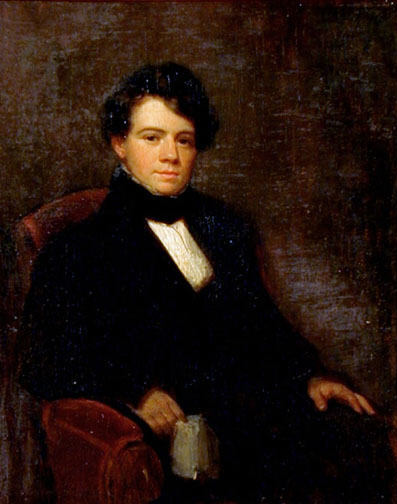
George Lee Schuyler, 1839.
By Richard Morell Staigg. At NYHS.


In 2019, Schuyler Mansion was fortunate to acquire letters to and from George Lee Schuyler, Eliza Hamilton Schuyler, Philip, Louisa Lee, and Georgina. The letters provide a window into their lives, travels, interests, and education. An 1859 letter from seventeen-year-old Georgina also reveals an early interest in history and historic preservation.


In 1859, Georgina was attending school in Boston. On Tuesday, February 22, 1859, she wrote a letter to her father about the festivities she attended that day to celebrate George Washington’s birthday.


“Dear Father–– Today being Washingtons [sic] birthday we have had a holiday, which I have entirely appreciated [...] this morning I received Mothers [sic] Sunday letter, telling me of Mt Vernon donations––The day has been very fine, & the bells have rung, the canons have been fired, the Hancock house open to the public, a fair opened, a grand ball tonight at one of the theatres, & last, not least, Mrs. Harrison Grey [O]tis received her friends- So you see they do things in quite a spirited ways to celebrate the day, even if they wont [sic] buy Mt. Vernon, which they ought to; I think its is [sic] a great shame that they don’t.”


In her letter, Georgina mentions two historic homes: the Hancock House, or Hancock Manor as it was known, and Mount Vernon. 


Hancock Manor, circa winter of 1860.
Hancock Manor, once home to John Hancock, served as headquarters to British General Henry Clinton before his evacuation from Boston and was where John Hancock hosted Washington, Lafayette, and other famous guests. In 1859, when Georgina visited, it was privately owned by his heirs, who opened it to visitors for the day. That same year, the heirs offered to sell it to Massachusetts to serve as the Governor's Mansion, but by 1863, the state had failed to purchase it, and it was sold at public auction. It was torn down less than two weeks after its sale.


Mount Vernon met a different fate. A year after Georgina penned her letter, the Mount Vernon Ladies Association (MVLA) raised enough funds to purchase Mount Vernon from John Augustine Washington. Ann Pamela Cunningham, founder of MVLA, started the association’s efforts in 1853, and by late 1859, raised $200,000. The MVLA officially took over the home in 1860 and began the process of preserving it and turning it into the historic site it is today.


In their adult years, Georgina and her sister became involved in the preservation of Schuyler Mansion and donated a sizable amount of the furniture and items they inherited from both their Schuyler and Hamilton ancestors. Their efforts during the early years of Schuyler Mansion as a museum and the donations they made to the site will be explored in upcoming blog posts, so stay tuned!

For further exploring: The Ticonderoga Historical Society is housed in a replica of the Hancock House.

Saturday, May 2, 2020

The Hamilton Children: Part One

On Twitter we’ve been highlighting one of Elizabeth Schuyler and Alexander Hamilton’s children each week. The couple had eight children, and so far we’ve discussed their eldest four: Philip, Angelica, Alexander Jr., and James Alexander. We’ve rounded-up a few facts about each of them here. Enjoy!

(Links to more about each individual are included at the end of each section.)

Philip Hamilton
January 22, 1782––November 24, 1801


The Albany Dutch Reformed Church.
Philip was the only Hamilton child to be baptized at Albany in the Dutch Church the Schuylers attended. From the time he was an infant, his father believed Philip held future greatness. This belief in his eldest son never faltered.

When Philip was nine, he went to school in Trenton, NJ, while his family lived in Philadelphia. Eventually, his younger brother Alexander Jr. joined him there.

At the age of fifteen, Philip contracted a serious fever. Dr. David Hosack saved the boy from the brink of death. Sadly, Dr. Hosack could do nothing but watch as Philip died after his fatal duel with George Eacker just a few years later.

Learn more about the life and legacy of Philip Hamilton here.


Angelica Hamilton
September 25, 1784––February 6, 1857


Angelica Hamilton's piano
at The Grange.
Angelica was born in New York City and named after her aunt, Angelica Schuyler Church. Her aunt, even though she was abroad in England for most of her niece’s childhood, managed to dote on Angelica from across the Atlantic. She sent her young namesake a piano similar to her own children’s––the best that could be made in London, she claimed.

Based on letters, Angelica seems to have spent more time at Albany with her grandparents than her siblings. In 1803, when her grandmother Catharine van Rensselaer Schuyler died, her grandfather wrote Eliza Schuyler Hamilton that her daughter helped him through his grief.


Unlike the popular story, Angelica did not have a permanent breakdown upon the death of her brother in 1801. Instead, she seemed to have times when she was healthy and times when she was ill. By the 1830s, she was placed in an institution under the care of Dr. MacDonald in Flushings, Queens.

Read on and dispel some more myths about her here.


Alexander Hamilton Jr. 
May 16, 1786––August 2, 1875


Gertrude Schuyler Cochran
by the Baroness Hyde de
Neuville.
Born in New York City in 1786, Alexander Jr. was named for his father. He was baptized at the age of two with four baptismal sponsors, including his great aunt, Gertrude Schuyler Cochran.

After the education he received alongside his older brother, Alexander Jr. attended Columbia College, too. Weeks before his graduation, he had to bury his father.

His father wanted Alexander Jr. to become a merchant, but he became a lawyer instead. Before settling into his law practice, he fought with the Duke of Wellington’s troops against Napoleon in Portugal and served during the War of 1812.

In a weird twist of fate, he was Eliza Jumel’s lawyer, and is believed to have been her lawyer when she divorced Aaron Burr.

Keep reading about Alexander Jr. here!


James Alexander Hamilton
April 14, 1788––September 24, 1878

The Second Bank in Philadelphia.
Born in New York City in 1788, James Alexander was named for his paternal grandfather. Just like his father and older brothers, James attended Columbia College. His father wrote him a “thesis on discretion” while James was a college student. Hamilton penned this for his son days before his fatal duel.

James eventually became a lawyer. While he was practicing the law in Hudson, NY, he met Mary Morris. They wed on October 17, 1810, and had five children together. In 1835, the family moved into “Nevis,” the mansion James had built in Irvington, NY, and named after his father’s birthplace.

James served during the War of 1812 and he was the Acting Secretary of State during Jackson’s administration. Like Jackson, James opposed the Second Bank––the reincarnation of the bank his father built.

He left his letters, thoughts, and legacy behind for all to read in his memoir, Reminiscences of James A. Hamilton: Or, Men and Events, at Home and Abroad During Three Quarters of a Century.

Click here to read more about James.


Check back in a few weeks to learn about the other four Hamilton children: John Church, William Stephen, Elizabeth, and “Little” Philip.

Interested in further reading? Check out the biography on the doctor who saved Philip Hamilton from his fever: American Eden: David Hosack, Botany, and Medicine in the Garden of the Early Republic

Friday, April 17, 2020

“…More scarce and nearly as dear:” The Schuyler-Hamilton Family, Illness, and Food Shortages

Alexander Hamilton painted
by James Sharples; 1796.
By Jessie Serfilippi

Today we’re facing so many challenges at once: fear and worry for the health of loved ones and ourselves, shortages of food and supplies, and an uncertain economic future. Our fears today were once the fears of the Schuylers, Hamiltons, and everyone else in their 18th century world. This letter from Alexander Hamilton to his wife, Elizabeth, serves as a glimpse into some of their fears and worries in 1796.

On October 26, 1796, Hamilton wrote a letter to Elizabeth from her father’s home in Albany. He wrote: “I was consoled to hear that you & our darling little ones were well—though I shall be anxious till I rejoin you lest there should be a relapse or some new attack.”

Hamilton may have been referring to an unspecified illness Eliza and their children had recovered from, or to the dreaded Yellow Fever, which hit New York City once again in 1796. In either case, the resurgence of this deadly illness must have weighed heavily upon the family’s minds since the Hamiltons had so narrowly survived the 1793 epidemic in Philadelphia. 

While Hamilton worried for his family’s health, his father-in-law, Philip Schuyler, was dealing with his own chronic health issues. Schuyler seems to have suffered another round of ulcers and sores on his legs, but Hamilton informed Eliza her father was “really better and as I hope in no present danger.” He continued with more good news. Schuyler’s “breaking out” did not appear to be “mortification,” which in the 18th century referred to gangrene. 

Elizabeth Schuyler Hamilton
painted by James Sharples; 1796.
Following the good news of her father’s health, Hamilton broke a bit of bad news to Eliza. While her sister Peggy had beef ready to go down the Hudson to her, Hamilton stated “Eggs are more scarce & nearly as dear as at New York. I shall see what can be done as to butter.” 

This shortage does not appear to have been related to Yellow Fever, but rather to what is now known as the Panic of 1796-1797, during which the United States and Great Britain took economic hits. The ramifications of the downward economic spiral really hurt shop owners and artisans, and caused widespread shortages, likely including the shortage on eggs Hamilton mentioned.

It is unknown if Hamilton was able to find the eggs and butter Eliza needed to make many basic and necessary foods. They, like so many other New Yorkers, may have had to do completely without such foods or with a depleted supply for some time. 

1796 was a tense and turbulent year for the Hamiltons and Schuylers. While they were separated during this time of uncertainty, they relied on the one form of long-distance social communication available to them: letters. Just like phone calls and video chats allow us to connect with loved ones right now, letters offered the Schuylers and Hamiltons the same comfort and reassurance when they couldn’t physically be together.  


For more on the Schuylers, Hamiltons, and Yellow Fever click here.

Wednesday, April 1, 2020

“Devoid of any facet of interest or spectacle”: Rensselaer Schuyler’s Unrealized Masquerade Emporium

***The article that follows was written as Schuyler Mansion's annual April Fools post. Unfortunately, Rensselaer Schuyler never planned to open a store called "Fancy Masks" (that we know of!). Thank you to everyone who played along!***

In August of 1792, Angelica Schuyler Church sent her brother Rensselaer a letter from London, where she was living at the time with her husband and children. She included the usual news of friends and family abroad, updates on conflict with France, and inquiries as to the health of her loved ones in America. However, despite being separated by an entire ocean and an age-gap of 17 years, the primary content of the letter indicates a deep familiarity on Angelica’s part with young Rensselaer’s most pressing concerns at that time- business and romance:

Though I am certain that Papa has been applying you heed the Advise [sic] of our brother Hamilton in matters of Finance, my heart beats maloncholy [sic] that he has not told you who it is who Advises him[.] For if he had, she expects she should have had a Letter from you some time ago, entreating her (that is, myself), to relate unto you all that she (that is, I) have to tell of the State of Finance in London, a matter on which I am very much Informed and Most Happy to share with my dear Brother…
As to that Other Matter, touching the Heart and all the Exhortions [sic] of Venus, you should not think it Amiss to say Amas*, nor to apply to your loving sister for Advise [sic] on this matter either. To this I will say only that you must take to a Ball the object of your Affections, the effection [sic] of which will be made most agreeable should you escort her to a Masquerade. It is a gathering of the most fashionable and amusing sort[;] at it all the couples wear Mascks [sic] and all of the most fantastical sort, with feathers and silks and all manner of Bazaar [sic] creatures, tigresses and Devils and other such phantasms. Such a gathering was had at the Prince [of Wales]’s apartments Several nights past, and tho [sic] I spent the whole night in good company there, several couples spent less time with the ensemble...

A Masquerade of the type described by Angelica Schuyler


Whether or not Rensselaer took his big-sister’s advice on romance to heart, he apparently saw in her letter a chance for a business venture.  While we do not have Rensselaer’s letter to his father, a letter written by Philip Schuyler to his son several weeks after Rensselaer received Angelica’s message sheds light on Rensselaer’s latest inspiration.
My Dear Son, 
Pleased tho [sic] I am to hear that you intend to take an interest in entering the World of Business at last[,] your letter of the 3rd instnt [sic] has given me cause to offer Trepeditious [sic] counsel. I fear you may have misread your dear sister Angelica’s intent in her advisement, for while she tells me she offered you advice on Both business and matrimony, I fear you have Conflated the Two into One. Your proposed course, that of establishing a Store for the selling of Maskerade fashions and other such frivolities, seems to me ill-advised and a poor use of the education in Maths, science, History, and all other Useful Arts which I have ever endevored [sic] to provide you with and Furthermore can only result in your unhappiness and mine, and the squandering of the fortune you request of me to secure the enterprise. Further, the illustrations of your Intentions, though artistically adept in their accuracy, are poor things, devoid of any facet of interest or spectacle capable of capturing the interest of those who attend such parties. Lastly, the name of the establishment, Fancy Masks, as you propose it, is a ridiculous thing, and beneath you in all ways I advise instead you apply yourself to Farming or Commerce, both of which in perfect harmony suffice to make a man wealthy and respected.
I remain, ever and adieu,
Yr Fthr
Ph: Schuyler

From this letter, it appears that Rensselaer’s plan was to open a store (whether in New York or Albany is not specified), for selling masks and fancy clothing for Masquerade Balls, as described by his sister, Angelica. For years, the only reference to Rensselaer’s designs for his masks was Philip’s description in this letter. However, a recently discovered ledger book from within the Schuyler family contains a loose leaf of paper depicting what appears to be one of Rensselaer’s illustrations of the sorts of masks he intended to sell in his establishment. If this is the case, then it seems that his father’s description is unfortunately accurate.

Rensselaer never got to open Fancy Masks. Instead he set out on a life plagued by debt for many years before finally settling in to the life his father intended for him as a land-lord and developer. Still, one cannot help but wonder what his life would have been like had his creative impulses been better nurtured. Alas, we will never know.


* Latin for, "You love..."- wordplay off of "Amiss".


****************************************************************************

Happy April Fools! So as many have guessed, this article was, as they say, complete hogwash. However, while the overall premise was written as a prank, there is plenty of real historical inspiration. Masquerades were an extremely popular form of high-society entertainment, with an industry of purveyors of masquerade costumes and masks on hand to outfit the spectacular events. The mask depicted, however, was not a masquerade disguise, but actually a depiction of an 18th century fencing mask from Diderot's Encyclopédie.

The family dynamics in the (fabricated) letters are also rooted in historical reality. Angelica's reference to advising Alexander Hamilton on financial matters was inspired by correspondence with her brother-in-law in which she recommended and sent financial treatises to him from Europe. Similarly, Philip Schuyler's tone of disproval in the letter to Rensselaer matches his actual tone in discussing his youngest son's financial difficulties and education recalcitrance. We talk about these topics and more elsewhere on the blog and during tours and programming at Schuyler Mansion, so keep your eyes open for upcoming events and new articles!

Saturday, March 28, 2020

"I shall most cheerfully pay:" The Education of Caty Schuyler

By Jessie Serfilippi

Catharine "Caty" Schuyler at 15
(seated at pianoforte)
By November of 1793, seventeen-year-old Cornelia and twelve-year-old Catharine “Caty” Schuyler had completed six months of French lessons at Albany. Their father, Philip Schuyler, paid tutor Charles Rogers “three Dollars per Month Each.” Unlike their older sisters, who studied largely in Manhattan in the early 1770s, Cornelia and Caty seem to have completed a bit more of their higher education in Albany. This was likely a sign of better quality tutors in Albany.


But there was no delaying the inevitable. By 1795, Caty was enrolled in S. & N. Lilly’s, likely an academy in Manhattan. A surviving receipt of all the expenses her father paid the school for her education provides a window into the world of an upper class girl’s education in the 1790s United States.


Perhaps unlike other students, Caty didn’t live at the academy, as her father only paid “Day Board.” It’s likely that Caty lived with family and friends while in Manhattan. By 1795, her sister Eliza Schuyler Hamilton and her family had relocated to Manhattan from Philadelphia. By 1799, it’s evident that Caty lived with the Hamiltons, though her whereabouts before that are murky. Based on past evidence of the oldest three Schuyler girls living with family while receiving their education in New York City, it’s likely Caty stayed with her older sister.

Dwight's Geography 
Photo Credit: WorthPoint 
It seems as though Caty was immersed in nearly every subject possible. In the first quarter of her schooling in 1795, she took music and drawing lessons. She studied A Short But Comprehensive System of the Geography of the World: By way of question and answer, principally designed for children and common schools by Nathaniel Dwight. This was a newly published common book used to introduce children to the subject of geography, and was one of the first books to be uniquely American in style rather than a copy of British studies. It was the perfect educational tool for a young girl coming of age during the Federalist era, when the United States was distancing itself from British standards and creating its own.

Detail of tambour needlework
from Portrait of Catherine Lane Barker
by Gilbert Stuart; 1792.
Caty also heavily studied embroidery and “fancy needlework.” Three “Tambour Needles” appeared early in the list of expenses for her schooling. Tambour needles allowed the embroiderer to learn and work faster as only one stitch needed to be mastered. From other expenses, it seems Caty’s instructor drew scenes on fabric, creating a pattern for her to follow as she embroidered. These included “drawing a Landscape on Sattin” and “a Flower piece on Sattin.”

Caty studied subjects familiar to students today: writing and arithmetic. During her second quarter of schooling, her parents purchased her a cyphering book, or a book in which she copied her instructor’s multiplication problems, geometry questions, and even trigonometry lessons depending on the level to which she advanced. While this notebook turned textbook by the student was meant to impart mathematics knowledge, the problems were often framed as mercantile, or used to teach surveying, bartering, and interest. It’s impossible to know what level of mathematics Caty achieved or if she learned it with a slant toward something such as interest or bartering, but her father’s many business engagements and his seemingly liberal outlook on his daughters’ educations leaves open the possibility.

Caty’s education in the above subjects continued into 1797. In 1796, she was joined by her eight-year-old nephew, the son of her late brother Johnny, Philip Schuyler Jr. Her sister Cornelia joined her that same year for dancing lessons. Caty completed her own dance lessons in 1797. This could have been a sign that she was ready to enter society. Dancing was an important skill for both girls and boys of high society to possess, as they were expected to know the latest styles of dance for balls––opportunities for meeting a future spouse.

While receipts for Caty’s formal education ended in 1797, in 1799, eighteen-year-old Caty was still studying, though likely on her own. A letter from her father written on November 24, 1799, reveals the one of the only people aside from Caty and her parents with a hand in her education was her brother-in-law, Alexander Hamilton. Schuyler wrote to her that “It gratifies me that you will solicit your brother Hamilton to direct you in your studies, his mind is so correct that he will point out to you the best Authors.”

These authors may have been connected to the study of geography and history, for earlier in the letter Schuyler wrote “Any expenses of tuition or others I shall most cheerfully pay. The science of geography is so essential in order to read history with the best advantage that I am greatly pleased at your intention to study It -– and knowing your attention, I am persuaded you will make great progress in It.”

While not said in Caty’s own words, her father’s response to her now missing letter suggests geography and history were subjects she took an interest in on her own. His praise of her intellect speaks to her intelligence and dedication to her studies… At least to the subjects she was fascinated by. In the same letter, Schuyler reminded her “drawing is also a valuable accomplishment” and encouraged her to continue that line of study; perhaps suggesting it was a subject she did not take much interest in.

Caty’s education marked her as the child of a wealthy family. From music and embroidery, to arithmetic and geography, Philip and Catharine Schuyler provided Caty with a sound education and encouraged her academic interests. At times, the Schuylers’ choice of subjects for Caty held to the conventions of the time period, but at other times their choices ignored popular suggestions for a young lady’s education.

Education philosopher Benjamin Rush’s Thoughts upon female education, published in 1787, could have provided the Schuylers with a guide for Caty’s education. Rush touted writing and reading the English language and arithmetic as essential for a young lady to learn so she could impart that knowledge to her own children, and so she could bookkeep and run a household should her husband die. He believed that the study of geography and history made a woman an “agreeable companion for a sensible man” and qualified her for a “general intercourse” with the wider world. While her parents educated Caty in subjects Rush emphasized as essential, they also deviated from Rush’s philosophy.

Portrait of Caty Schuyler above pianoforte in Best Parlor
of Schuyler Mansion; 2020.

Rush believed American women had no use for the French language; Frenchmen should learn English if they wished to converse with American ladies, and the best of French literature was translated into English. Rush insisted that women should not learn to play any instruments, as mastering them required too much time better devoted to other subjects and the instruments took up too much space in the house. He even stated women shouldn’t learn drawing, as he believed there was no use for it in her future as a wife and mother.

Despite Rush’s philosophies, Caty learned French, the pianoforte, and drawing––subjects seen as unnecessary for future Republican Mothers, but essential for the upper class, accomplished woman her parents wanted her to be. Her parents also knew the better Caty’s education, the better her choices of a husband would be, too. With each subject she studied, Caty was prepared to take part in the changing nation around her.

To see tambour needlework embroidery in action, click here.

To see a video about dancing a minuet, click here.

The receipts referenced are part of the NYPL’s Philip Schuyler Papers.

Sunday, September 8, 2019

"You must not Insist upon depriving us of them...": Philip and Catharine Schuyler as Protective Grandparents


by Ian Mumpton and Jessie Serfilippi
My Dear Sir, 
…It is very natural that you and my Dear Eliza Should be anxious to have your children with you, but in this instance I apprehend your prudence has given way to your feelings[.] The fatal disorder [i.e. Yellow Fever] which has so severely been experienced at Philadelphia, may have abated, or even for the present apparently subsided, but many months must elapsed before it can be determined that the dreadful Scene will not be renewed… I have concluded that It would be improper to Acceed to your wish, If however after some farther experience you shall Judge that all danger is past, I will either carry down the little one and his nurse, or send them in charge of my son Rensselaer, but the others we all agree must remain until Spring…
The children are all in perfect health, so happy and docile and afford us so much pleasure and real satisfaction that we should part with them with infinite reluctance, you must not therefore Insist upon depriving us of them. They all Join us in love, to you & Eliza.
 
I am my Dear Sir   Most affectionately Yours 
Ph: Schuyler 17 November 1793


John Church Hamilton was less than two years old when his
grandfather wrote the above letter to his parents, arguing that
it was too dangerous to send the children back to Philadelphia
after the Yellow Fever epidemic of 1793.
Today is Grandparents day in the US. Had they celebrated the day in the 18th century, Philip and Catharine Schuyler would have been inundated with cards. Their eight children that Philip and Catharine saw live to adulthood brought a total of thirty-nine grandchildren into their lives! Philip and Catharine proved to be doting grandparents, and took an active interest in their grandchildren’s  happiness, educations, and safety.

The letter above was written on the 17th of November, 1793. The previous summer’s outbreak of Yellow Fever had been particularly deadly, especially in the city of Philadelphia. In order to protect their children from the illness, Alexander and Elizabeth Schuyler had sent their six children to their grandparents’ home in Albany. Despite the return of cooler weather that Autumn and the abatement of the epidemic, Philip and Catharine still feared for their grandchildren’s safety… refusing to send them to Philadelphia until the following Spring.

Given the wide age-range amongst their own children (the oldest and youngest of whom shared a birthday, twenty-five years apart), Catharine was raising her last child at the same time that her oldest daughters were raising their first children. Her daughter Elizabeth gave birth to her first child at the Schuylers’ home in Albany not long after her youngest sister was born.

Because of this age gap, Philip and Catharine did not meet all of the grandchildren. Of the thirty-nine grand-kids, only twenty-seven had been born at the time of Catharine and Philip’s deaths (in 1803 and 1804 respectively). Sadly, of these twenty-seven, the Schuyler family would bury seven grandchildren, including six who died in infancy or childhood, and one, their grandson Philip Hamilton, who was killed in a duel at the age of nineteen. In total, thirty of the thirty-nine grandchildren survived to adulthood.

While it is heartbreaking to think that the family had to grieve the losses of nearly a quarter of that generation, these statistics were a marked improvement over those of the generation before- Catharine lost seven out of fifteen of her children before their first birthdays.  It is small wonder that the Schuylers’ were unwilling to send their grandchildren back to Philadelphia without the complete certainty that the epidemic which had claimed the lives of a full ten percent of the population of the city was truly over!